

Get Understanding
If we, as Bible readers, do not study and read Hebrew, then we rely solely on the translation work of multiple translators who translated the original words of the Bible — from the Hebrew Israelites who authored the Scriptures — into the languages we speak, read, and most importantly, UNDERSTAND.
“Wisdom is the principal thing; therefore get wisdom: And with all thy getting get UNDERSTANDING.”
Proverbs 4:7 KJV
Translations and Transliterations
I read and speak the European language of English (just like you, if you’re reading this), and I grew up reading—and still read—European English Bible translations, such as the King James Version (KJV), The Amplified Bible (AMP), The New International Version (NIV), The New Living Translation (NLT), the English Standard Version (ESV), and others. All of these are different English versions of the Hebrew Israelite Scriptures.
Yes, the entire Bible—from Genesis to Revelation—is a Hebrew Israelite collection of books and writings, authored by Hebrew Israelites, to Hebrew Israelites, for Hebrew Israelites. The English Bibles we read today are translations from the original Hebrew texts. And let me continue to emphasize this point: what is commonly called “The New Testament” was also written by Hebrew writers. It was spoken, written, and understood by Hebrew Israelites before being translated and transcribed into Greek, Latin, Spanish, English, and other languages.
While many of the original words and phrases are translated, some are instead transliterated. And before we proceed any further, let us ensure that we understand the difference between these two transcription methods. You can find deeper insights on this topic all over Google, but for now, this explanation will suffice:
A Translation gives you the meaning of a word that’s written in another language.
A Transliteration doesn’t tell you the meaning of the word, but it gives you an idea of how the word is pronounced in a foreign language. It makes a language a little more accessible to people who are unfamiliar with that language’s alphabet.
For example, the Bible translators chose to sometimes translate this particular Hebrew phrase, while other times they transliterated it. What phrase am I talking about? If you’ve been with me for a while, you already know… The Hebrew phrase of exclamation I’m talking about is: “HalleluYAH” which is most often erroneously spelled “Hallelujah”
Mistranslation Example: What does “Hallelujah” mean?
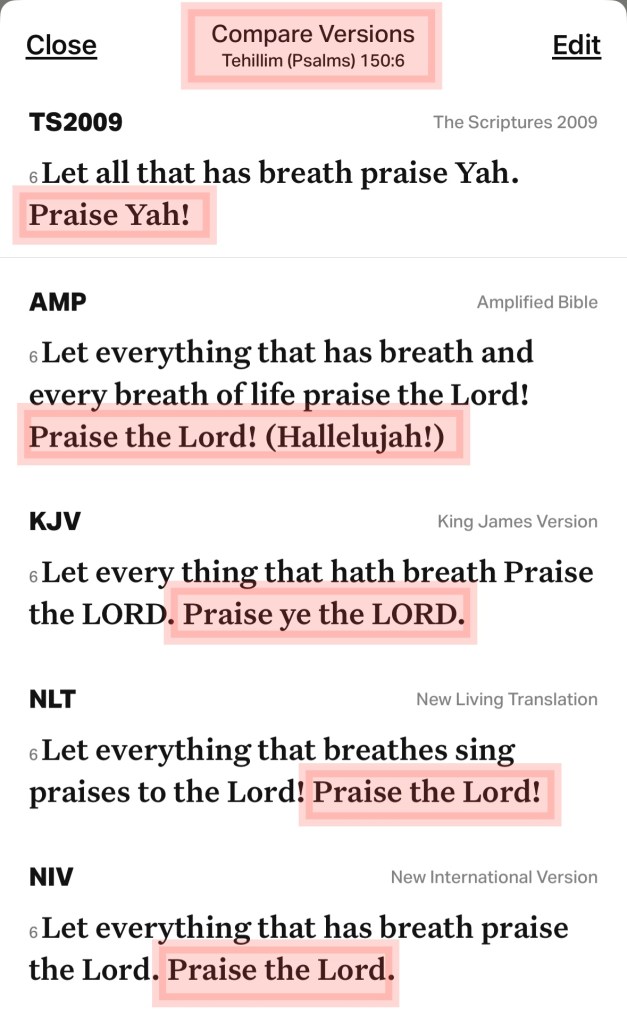
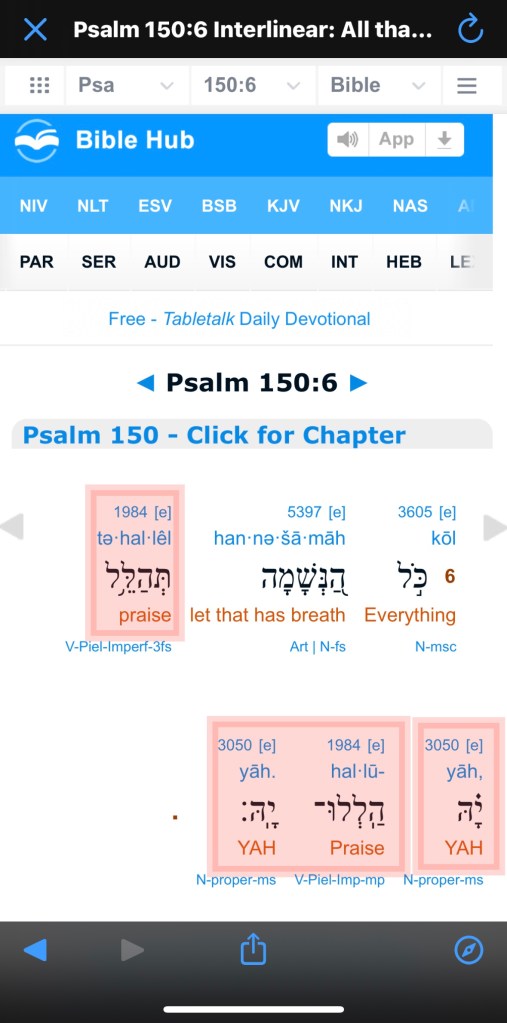
HalleluYAH (hallelujah) is a Hebrew phrase of praise, derived from the contraction of two Hebrew words. The Hebrew הַלְלוּיָהּ, is transliterated in English as “HalleluYAH” (again, most Bibles erroneously render it with a “j” as “hallelujah”). However, this phrase is far more often mistranslated rather than transliterated or properly translated, appearing as the phrase “Praise the Lord” in most English versions of the Scriptures. A more accurate translation & transcription would be “Praise YAH” (more on that later).
This is a clear and simple example you can verify throughout Scripture. To illustrate how translators handled this phrase differently, even within a single verse, let’s look at the final verse in the book of Psalms:
Mistranslation Creates Misunderstanding
Some words don’t need to be translated, and others should NOT be translated at all. Instead, they can be defined to provide understanding for foreign speakers while remaining transliterated, not translated/mistranslated. Proper nouns, such as names, fall into this category—they should only be transliterated so they can be read and pronounced by those who don’t speak the original language.
For example, I lived and traveled overseas for nine years, visiting multiple countries with different languages, alphabets, and scripts. Not once did I need to translate my name. Even if my name was transliterated into other letters or characters, my name’s meaning and intended pronunciation never changed. Now, I’m just an ordinary person, so consider famous individuals like celebrities, or even presidents—when they travel abroad, do people change their names into a national equivalent or replacement variation? No, they don’t, and if they do, it is wrong — unnecessary and disrespectful to do so.
So, why would Bible translators think it was acceptable or necessary to change the matchless names of the Father and the Son in their translations? Why would translators disrespect and alter the names of anyone in Scripture at all? I’ve covered, in length, the true names of The Father and The Son in other blogs, but for now, I’ll leave you with a quick couple of screenshots to reflect on:
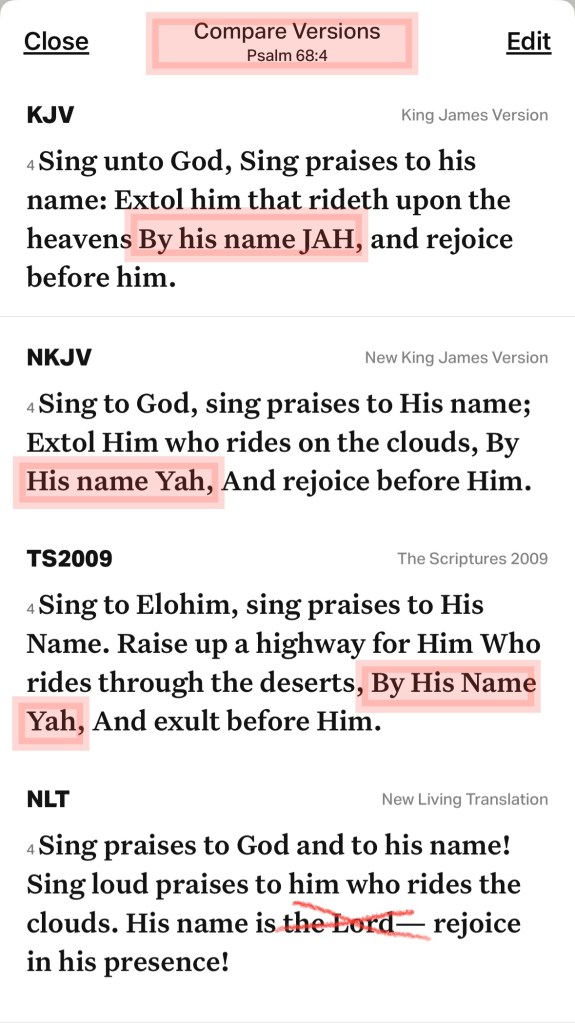
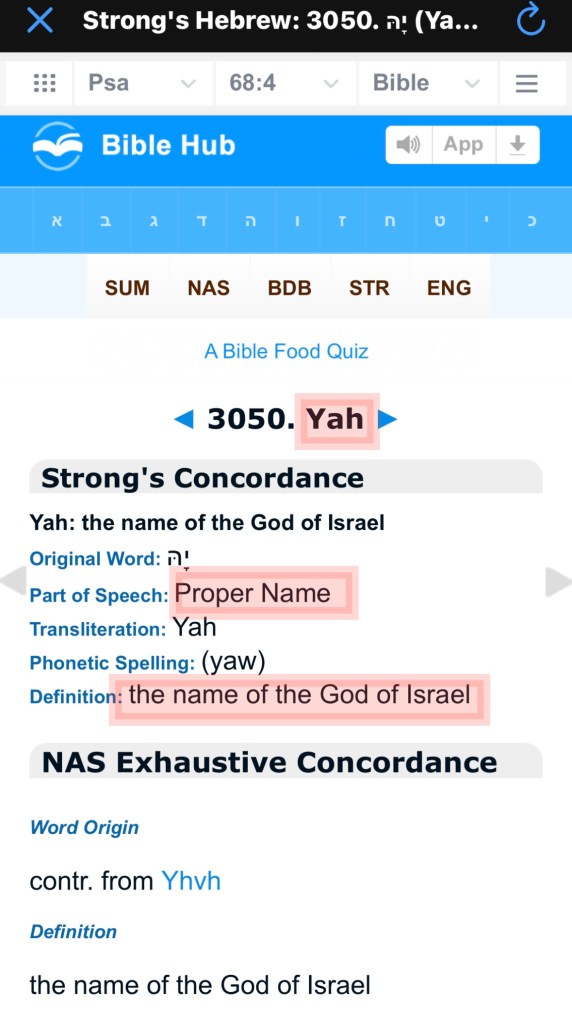

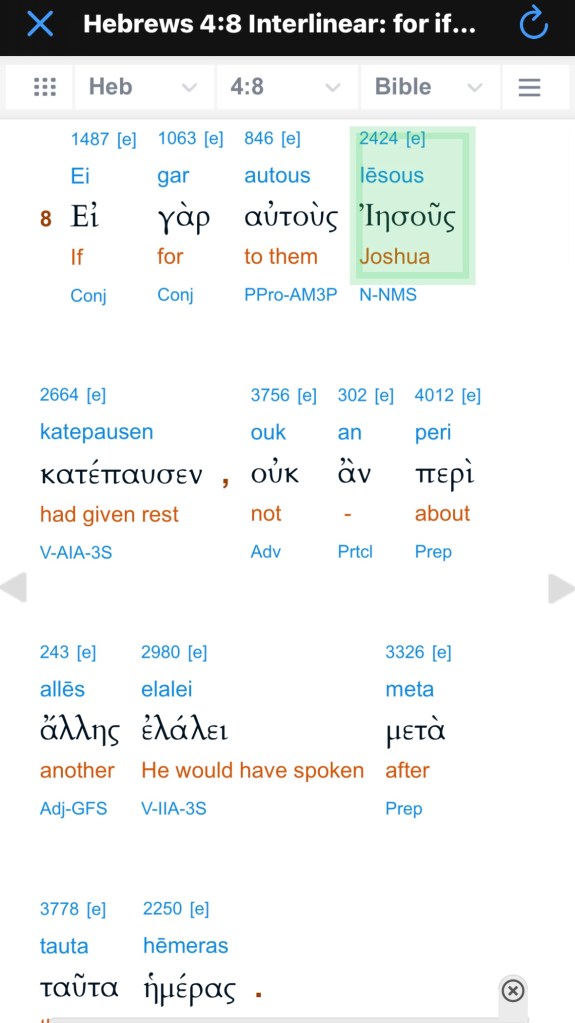


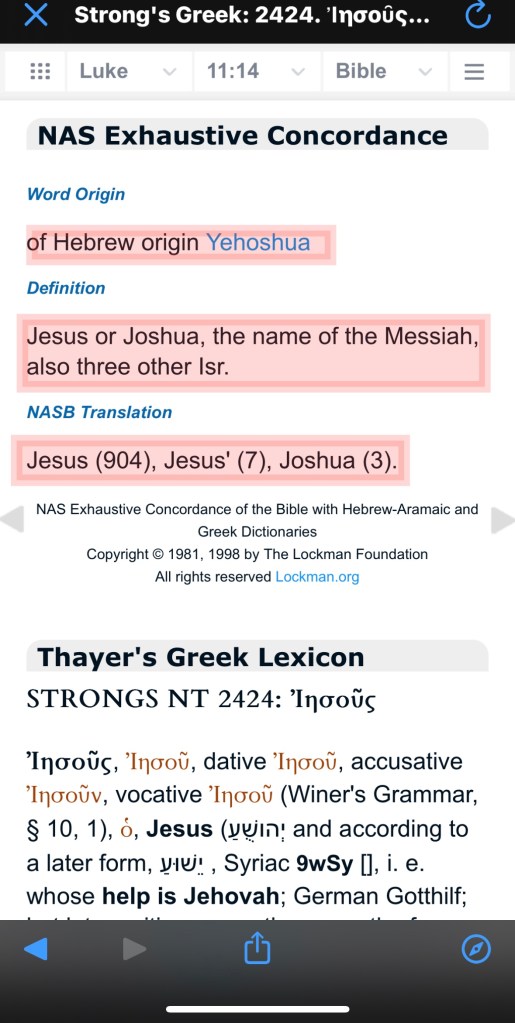

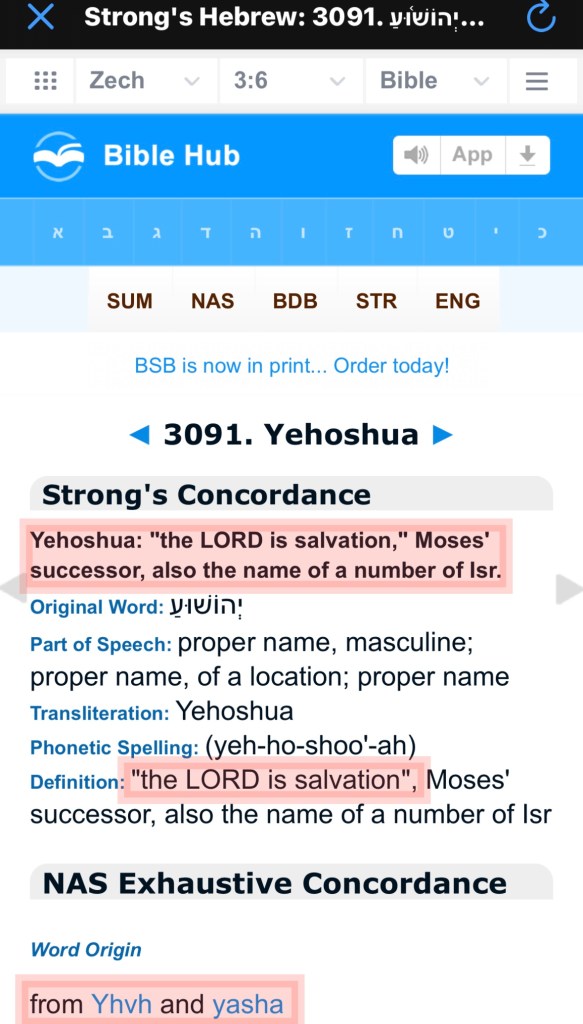
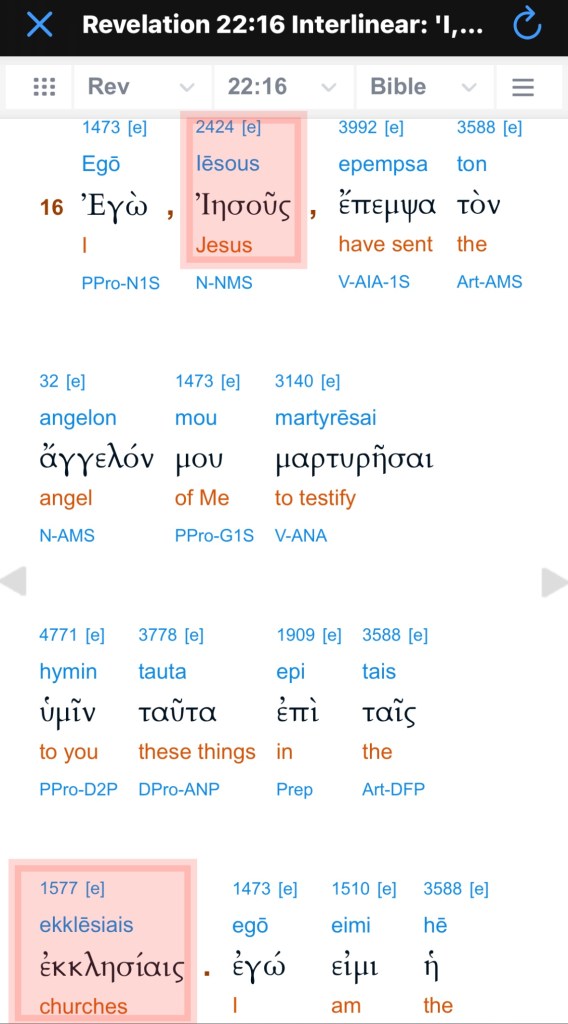
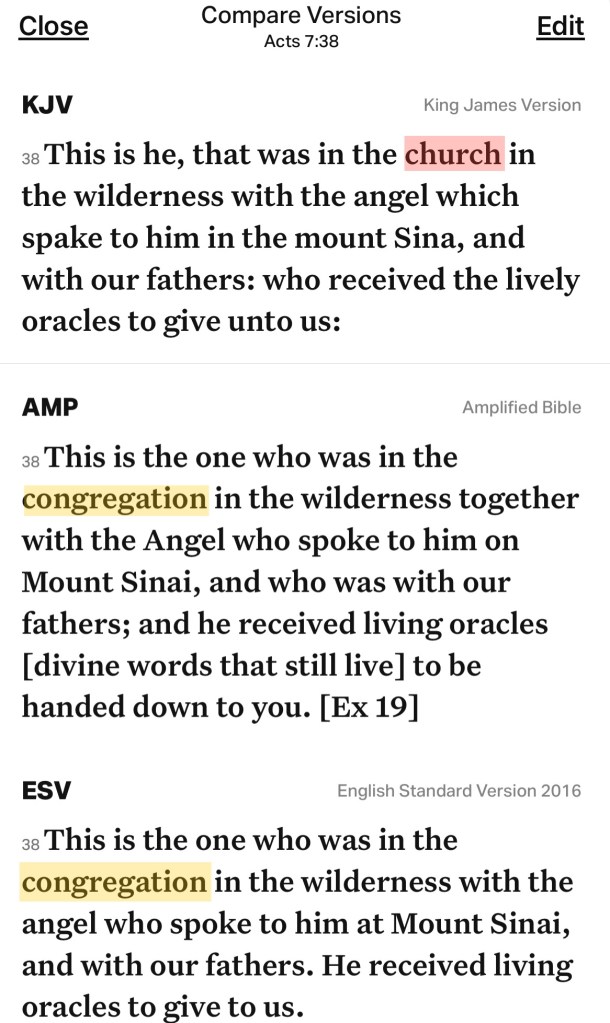
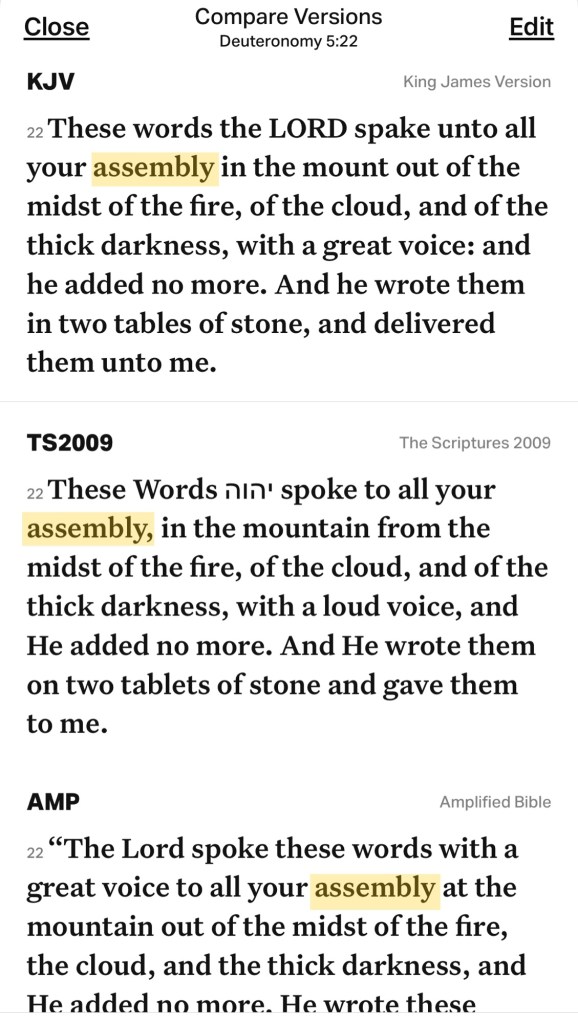
In addition to mistranslating and mis-transliterating the names of the Father and the Son, Bible translators also introduced other words they should not have. For instance, the word that should have been rendered as “Assembly” or “Congregation” of believers/Israel, was instead replaced with the word “Church”.
The creation and insertion of the word “church” in the New Testament has led to misunderstanding. Its manipulative use gives the false impression that there was no assembly or congregation in the so-called “Old Testament” days. Translators deliberately inserted “church” in their New Testament translations while avoiding its use in their Old Testament translations. Consider this:



Conclusion
Family: we are not children of some obscure, unnamed lord god, nor are we followers of some falsely named son of god jesus, nor are we part of some church (again, please fully watch the video linked above if you are confused by that). We are the chhildren of The Most High YAH, we are the followers of Yahoshua the Son of YAH, and we are the assembly/the congregation of Israel.
It is time to reject and cast off these bywords and the corrupt names that translators have inserted into our Scriptures. We must restore and honor the true name of The Most High YAH, calling upon the name of our Elohim, not the inferior title of “lord”. We must also reclaim and correct the name of our people. We are not a church; we are the assembly, the congregation of Israel. HalleluYAH/Praise YAH!
“Through Thy precepts I get understanding: Therefore I hate (turn away from) every false way.”
Psalm 119:104 KJV
Until next time, shalom ✌🏾
~Yahrahn
Like, comment, share, and subscribe
If you would like to donate:
Cash App: $Yahrahn https://cash.app/$Yahrahn
PayPal: @Yahrahn https://www.paypal.me/Yahrahn

Todah Rabbah
LikeLiked by 1 person
🫡Todah rabah too you! HalleluYAH!
LikeLike