Welcome back to our thought-provoking series where we will examine and debunk some of the outright lies and common misconceptions that are told concerning biblical matters. Let us separate fact from fiction as we test modern beliefs against the standards, wisdom, and instructions that are found in the Biblical Scriptures.
What is a the church?
Alright, let’s get into it:
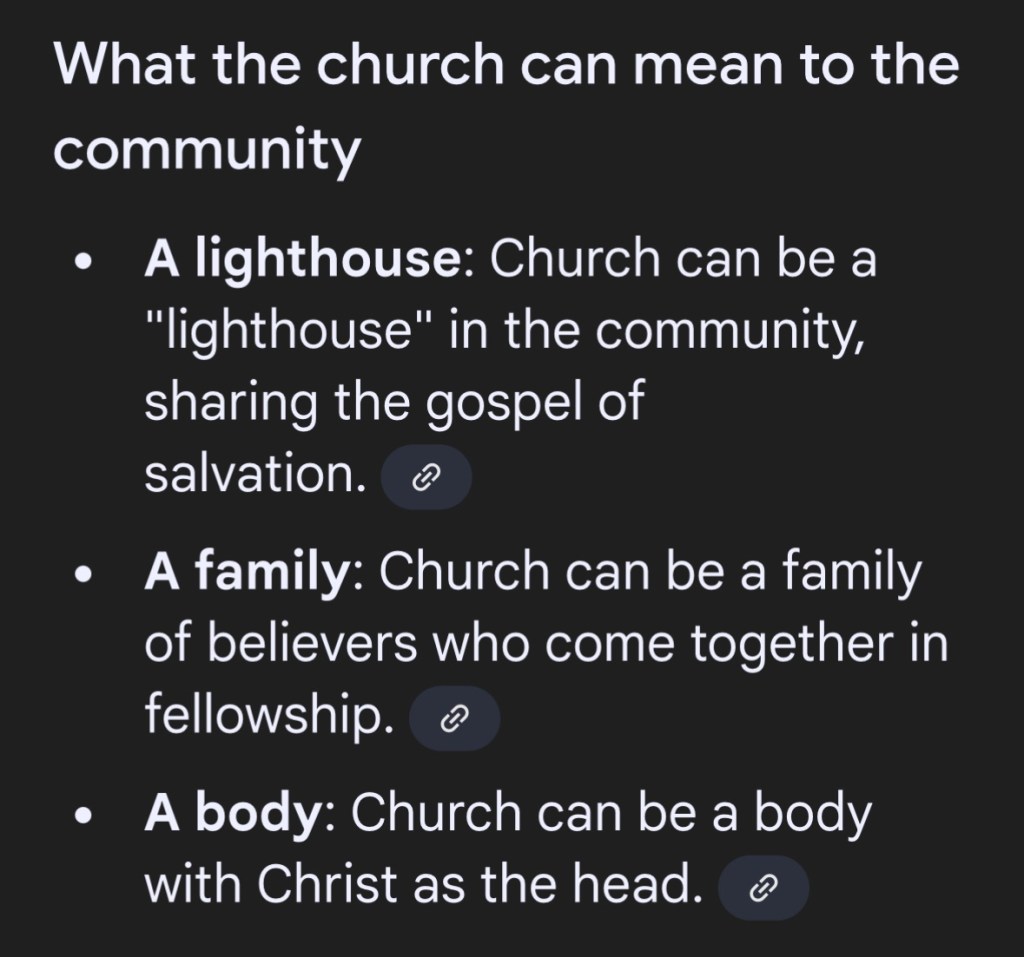
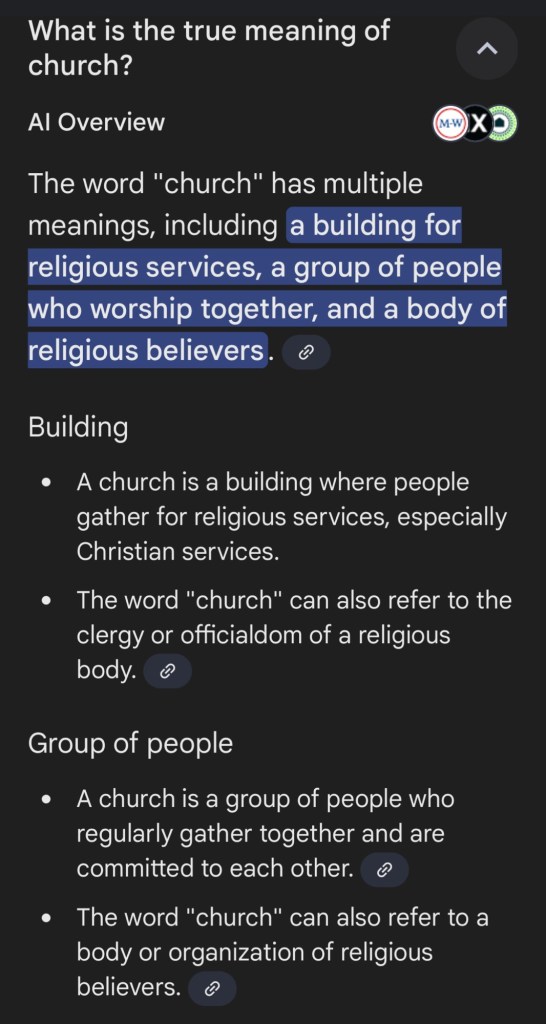
If you ask people to define what the church is, you’ll often hear responses rooted in tradition and misconceptions, some common notions like the ones we will read in the screenshots below. So first, let’s take a quick look at these prevailing views before we test them against the truth revealed in Scripture:



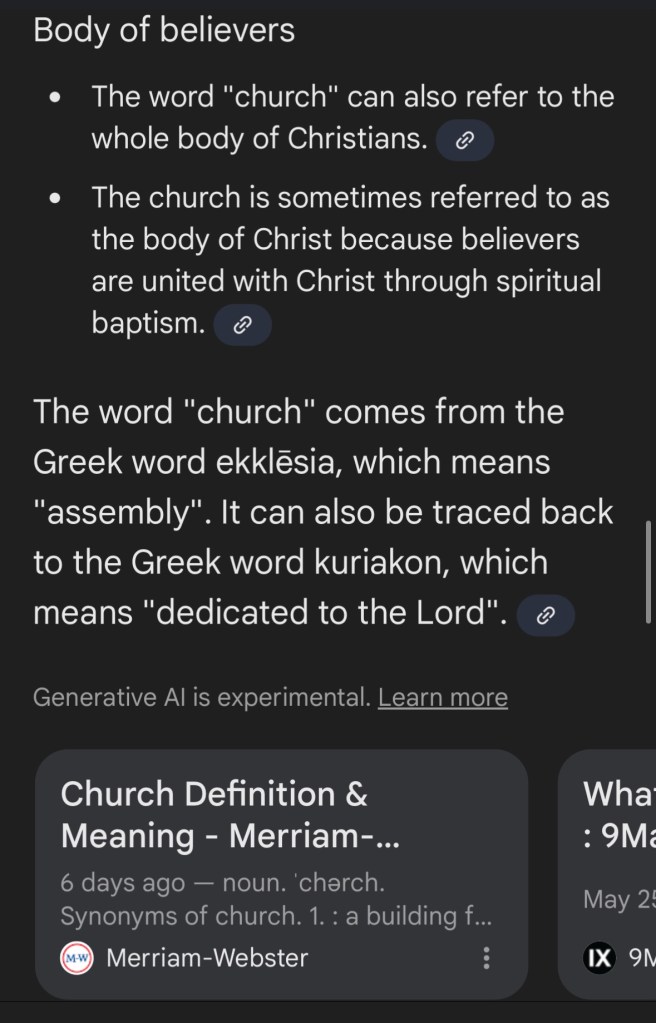
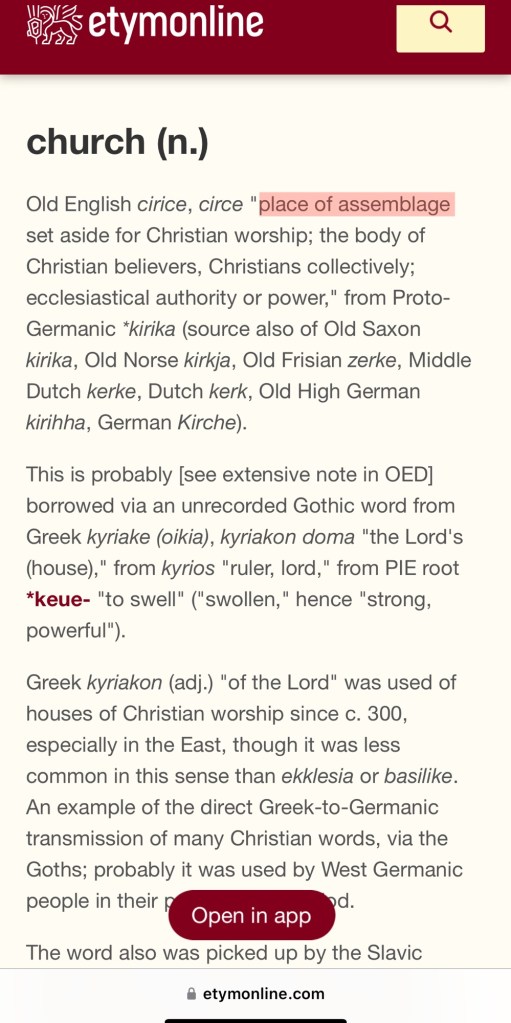
Etymology of the word church
Now, let us look at a couple of words, one Hebrew and the other Greek because they are the most frequently used words that are translated into the English word “Church” in our English versions of The Bible:
BLUF (bottom line up front): The “Church”, according to the Bible, is the assembly/congregation/gathering/body of The Messiah/Nation of Israel, who are set apart by and for The Most High YAH.

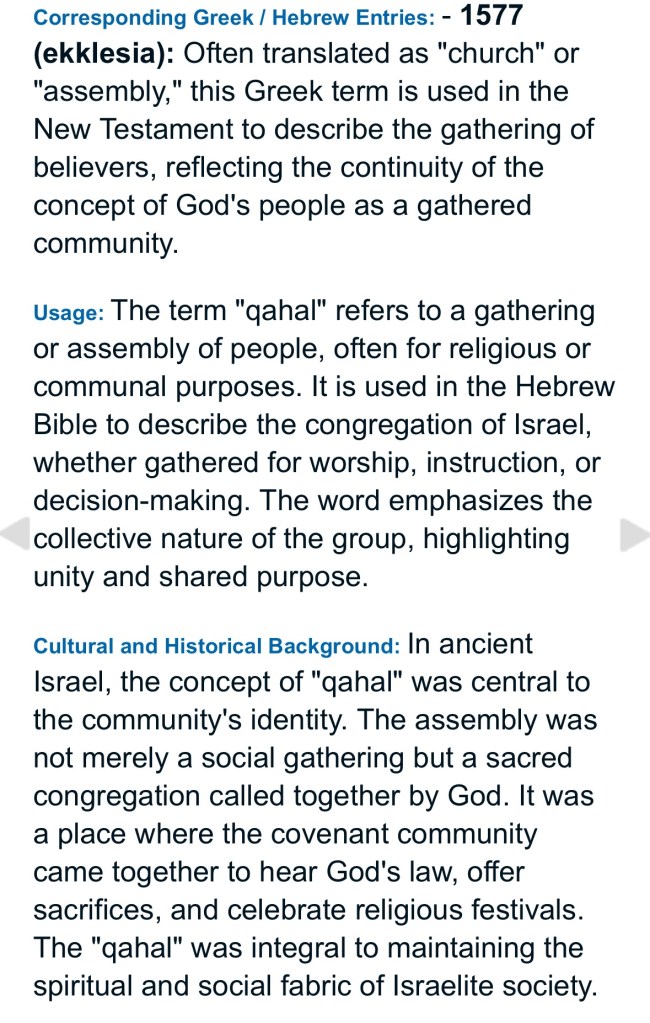
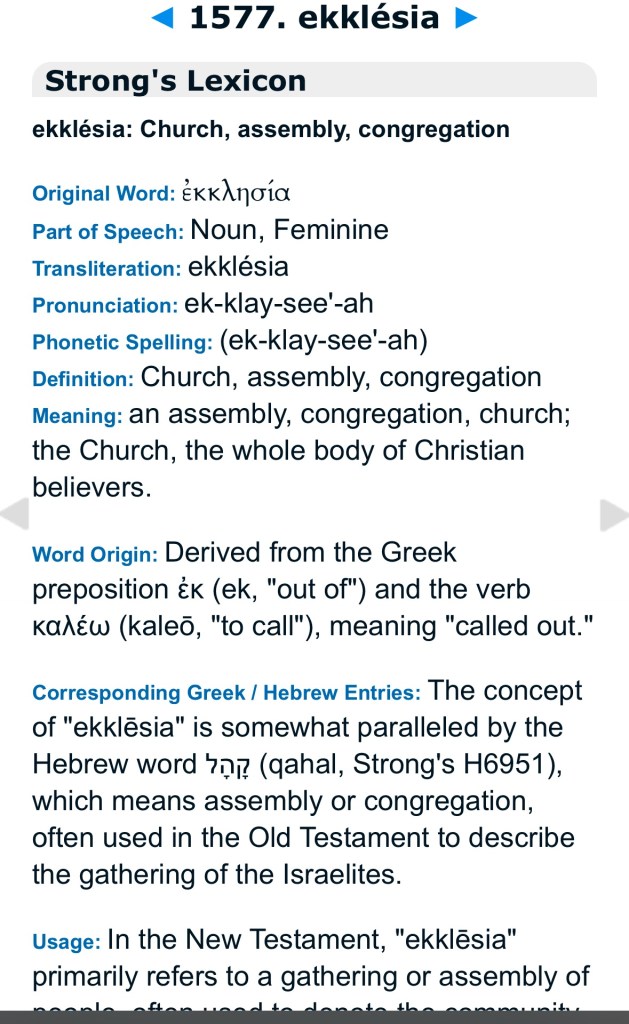


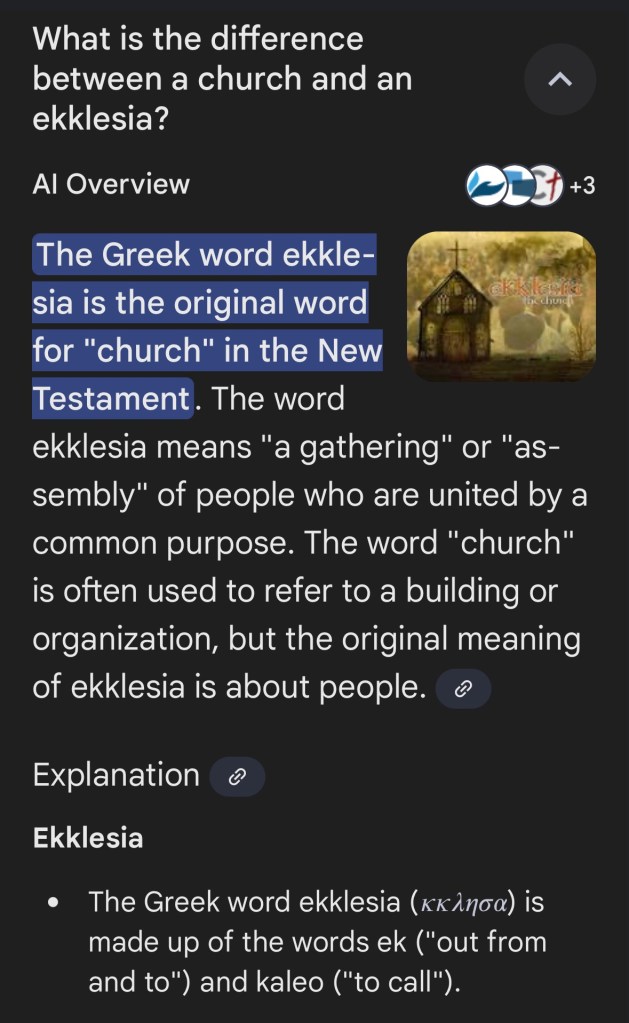
Non-Israelites, with their non-Hebraic languages and mindsets, shifted the focus from the people — to the place; they changed the emphasis from a gathering of people — to a place where people gather. This shift is unbiblical.
There are a couple of other words which get translated into “church”, but the two main Hebrew words (qahal and edah) and two Greek words (ekklesia and kuriakon) are associated with the English word “church”, though ekklesia is by far the most dominant in the so-called “New Testament” Renewed Covenant writings.
For more information on translations, transliterations, and the word church, click the link below, as it is a complimentary read. We will build upon what is covered there as we quickly continue and move towards wrapping this up:
Alright… It is time to review everything, build upon it, and properly compile it:
Biblical Understanding: The Qahal, also known as The Ekklesia, is often erroneously referred to as “the church” — its time to do away with the error
The words qahal (Hebrew), ekklesia (Greek), and church (English) are central to understanding the gathering of YAH’s people in Scripture. The origin and purpose of those words will always be tied to the covenant of The Most High YAH, and that truth, cannot be severed and it must be fully understood. Here are the Scriptural test results:
Qahal – The Assembly of YAH’s People
In the Tanakh (aka “Old Testament”) Scriptures, qahal refers to the assembly or gathering used to describe the congregation of Israel. This contextual usage of qahal first appears in Exodus 12:6 in reference to the gathering of the Israelites before the Passover. (And yes I know, qahal appears prior to the nation of Israel, but even the first mention references the nation that would come — Genesis 28:3)
The foundational qahal of YAH was more than just a group of individuals; it was a covenant community called & set apart by YAH to worship Him, receive His instructions, and live in obedience to the requirements of His covenant. Deuteronomy 9:10 speaks of the qahal of YAH, when Israel stood before Mount Sinai to receive the Torah commandments. This highlights the sacred purpose of the assembly: to commune with YAH and walk in His ways (Torah) — loving YAH & one another.
Ekklesia – Called Out Ones
The Greek word ekklesia is the “New Testament” equivalent of qahal. It means “called out ones” and was also used in secular Greek to describe a public assembly. In the Septuagint (the Greek translation of the Tanakh Scriptures), ekklesia is often used to translate qahal.
In the New Testament, ekklesia appears frequently, beginning with The Messiah’s declaration in Matthew 16:18:
“And I tell you that you are Peter, and on this rock I will build My ekklesia, and the gates of Hades will not overcome it.”
The ekklesia refers to the collective body of Messiah — people united through obedience to YAH and called out from the world to live as His disciples. The ekklesia/qahal is not tied to a building or denomination but it is a community connected to The Messiah, as its head, Ephesians 1:22-23:
“And He put all under His feet, and gave Him to be head over all, to the assembly, which is His body, the completeness of Him who fills all in all.”
Church – A Misleading Translation
The English word church has etymological connections to the Old English word cirice, which scholars speculate, is derived from the Greek kyriakon (meaning “belonging to the Lord”). While church is often used to translate ekklesia, its usage is misleading. Over time, “church” has come to represent physical buildings or religious institutions, which departs from the original, biblical understanding.
Scripturally, the terms ekklesia and qahal pertain to the community of people called by YAH who gather together to worship, obey, and serve Him, while loving one another. It was never about a church building, nor will it ever be. Instead, the members of the ekklesia/qahal of the Messiah form a body, connected to YAH through obedience and faith — it’s a covenant thing!
Key Takeaways
1. Qahal (Hebrew) – The assembly, gathering, or congregation of YAH’s covenant people.
2. Ekklesia (Greek) – The community of “called out ones” who follow The Messiah and maintain the covenant.
3. Church (English) – Unfortunately, the term is often misunderstood as simply a building or institution. The so-called church should be seen as the qahal/ekklesia/assembly in covenant with YAH. However, for this to happen, the so-called church would need to repent and adhere to the Commandments of YAH while also maintaining faith in the Messiah—a requirement that many within the so-called church will not embrace.
And family, of course I know, there are so many other Scriptures we could have explored, but I’m trying to be concise with this series. So, if you’d like to share any additional Scriptures, please post them in the comments.
Conclusion
To be a member of the set apart assembly, the qahal of YAH, The Body of The Messiah (which is erroneously so-called “the church”), you must:
- Obey the commandments of YAH
- Remain faithful to The Messiah
“Here is the endurance of the set-apart ones, here are those guarding (keeping) the commands of Elohim (YAH) AND the belief of יהושע (Yahoshua).”
https://bible.com/bible/316/rev.14.12.TS2009
Ḥazon (Revelation) 14:12 TS2009
As the body of believers in The Messiah, it is essential to understand Biblical terms. Again, the qahal/ekklesia/assembly/body of The Messiah is not a building, but as always it is who we are — a set-apart people who are called by the name of YAH, to obey Him, and reflect His light in the world, as His saints, His chosen nation of priests. And speaking of saints, ensure that you have gone over part 1 of this series:
Until next time, shalom ✌🏾
~Yahrahn
Like, comment, share, and subscribe
If you would like to donate:
Cash App: $Yahrahn https://cash.app/$Yahrahn
PayPal: @Yahrahn https://www.paypal.me/Yahrahn
Since this happens to be “breaking news” at the time of completing this part of the series, I encourage you to check out the video below. If you’re familiar with Pastor Philip Mitchel and his so-called 2819 Church, understanding the truth shared above sheds light on their church-building plight and emotional tears, making it all the more unnecessary. Always remember: the church/ekklesia/qahal is not a building — it’s a people, the obedient people of YAH!
Also, you may have heard claims that the word “church” originates from a pagan sorceress or demigoddess. I find this perspective more compelling than modern etymological explanations, despite its dismissal by worldly scholars. Like these scholars, I have my own reasoning and biases, but being keenly aware of the deception often present in worldly authorities, I believe this is another instance of a so-called conspiracy theory poised to come to light as a conspiracy fact. After all, the name “Circe” not only resembles “church” more closely than ekklesia but also aligns with it in religious connotation. Furthermore, even the scholars themselves admit that the etymology of “church” is both curious and convoluted.
Feel free to look into the topic and reason for yourself, here’s starting point for your additional research:


One thought on “Biblical Misconceptions Part 2: Exposing Lies Told About — The Church”