

Welcome back to our thought-provoking series where we examine and debunk some common misconceptions and some outright lies that are told concerning biblical matters. Let us separate fact from fiction as we test modern beliefs held by some against the standards, wisdom, and instructions that are found in the Biblical Scriptures.
In this installment of the Biblical Misconceptions series, we will address a topic that stirs both confusion & division among some Hebrew Israelites and our companions—clothing laws & head-covering requirements. Many sincere Israelites desire to obey YAH’s commands, yet sometimes community practices, misunderstandings, or misapplications of Scripture lead us to either add to or take away from The Torah. Let’s clear things up and see what is actually written in Scripture. First up, let’s start with what our clothes are made out of:
1. Mixed Fabrics – What’s Forbidden?
Torah says:
“Do not wear clothes of wool and linen woven together.”—Deuteronomy 22:11
https://biblehub.com/interlinear/deuteronomy/22-11.htm
This is the only specific fabric blend that YAH distinctly forbids—wool (tzemer) and linen (pesheth) together, a linsey-woolsey blend (shaatnez, the same Hebrew word used in Leviticus 19:19 https://biblehub.com/hebrew/8162.htm).


Yet, some believers extend this to mean any and all blends of fabrics, like cotton-polyester, spandex, rayon, etc… Be careful:
“You must not add to or subtract from what I command you, so that you may keep the commandments of the Lord (YAH) your God (Elohim) that I am giving you.”
— Deuteronomy 4:2
Question: Why do we not wear linen & wool blended fabrics? Because YAH told us not to. That’s the only reason we need.
Reportedly, scientific experiments also shine some light on the wisdom in obeying YAH’s Torah instruction. Again, reportedly, linen vibrates at around 5,000 Hz and wool around 5,000 Hz as well, which are frequencies that help to heal and strengthen our bodies, but when combined, their healing frequencies cancel each other out—resulting in a frequency of 0 Hz. This neutralization affects the body’s natural bioelectric field, diminishing its vitality. YAH’s instructions are precise and purposeful. More on that:
Let’s close this one up and move to the next point. Can we wear other types of fabric blends, such as, let’s say: cotton-polyester? Read the Scriptural commands from the beginning of this section once again. Torah does not prohibit cotton-polyester blends. Cotton & polyester blends are not wool & linen. Unless a person is under a personal conviction or vow to YAH to not wear any additional blended fabrics, there’s no sin in wearing other fabric blends other than linen & wool.
Side note: I am still working towards a full linen, everyday wardrobe with some wool clothing for the cooler months. That’s my preference, and it might be yours, but no matter what, we all should ensure that none of our clothing is made from linen wool blends. And importantly we should aim daily to keep our hearts knitted righteously in YAH’s pure, unadulterated truth!
2. Gendered Clothing – Does Torah Prohibit Women from Wearing Pants?
One of the more persistent misconceptions among some Israelite communities is the belief that Torah forbids women to wear pants, based on a twisting of this commandment:
“A woman shall not wear that which pertaineth unto a man, neither shall a man put on a woman’s garment: for all that do so are abomination unto YAH thy Elohim.”
Deuteronomy 22:5
And to understand this properly, we should remember the historical and cultural context of ancient Israel. In ancient Israelite times, neither men NOR women wore pants or jeans. Israelite Men and women—both—wore various types of clothing: tunics, robes, mantles, and the like—but garments were styled and tailored distinctly for men and women. Clothing that ‘pertained to a man’ was not simply the type of clothing, but its function, purpose, and gendered styling as designated for men; and of course, the same applied to women’s clothing, which ‘pertained to women’.
While modern pants, jeans, and shorts may sometimes blur stylistic lines, they are still generally manufactured with distinct cuts and designs for men and women. Israelite men don’t shop in the women’s section or wear garments made for women, and Israelite women likewise don’t wear men’s clothing—we don’t get down like that, we must stay true to who YAH called us to be. Deuteronomy 22:5 is not about pants or jeans; it’s about maintaining clear gender distinctions and not cross-dressing or blurring gender identity. The Torah opposes any attempt to erase, distort, or swap gender roles—whether through appearance or behavior. Just as ancient Israelite men wore long garments made specifically for men (and were not mistaken for women), women today can wear pants—so long as those garments are made for women and maintain the integrity of modesty and gender identity.
Again, Israelite men should always wear clothing that pertains to men, just as Israelite women should wear clothing that pertains to women. Our culture, historically, not only promotes this, but more importantly, our Elohim commands it!
Look through these images and consider clothing from the past and present, at home and abroad:
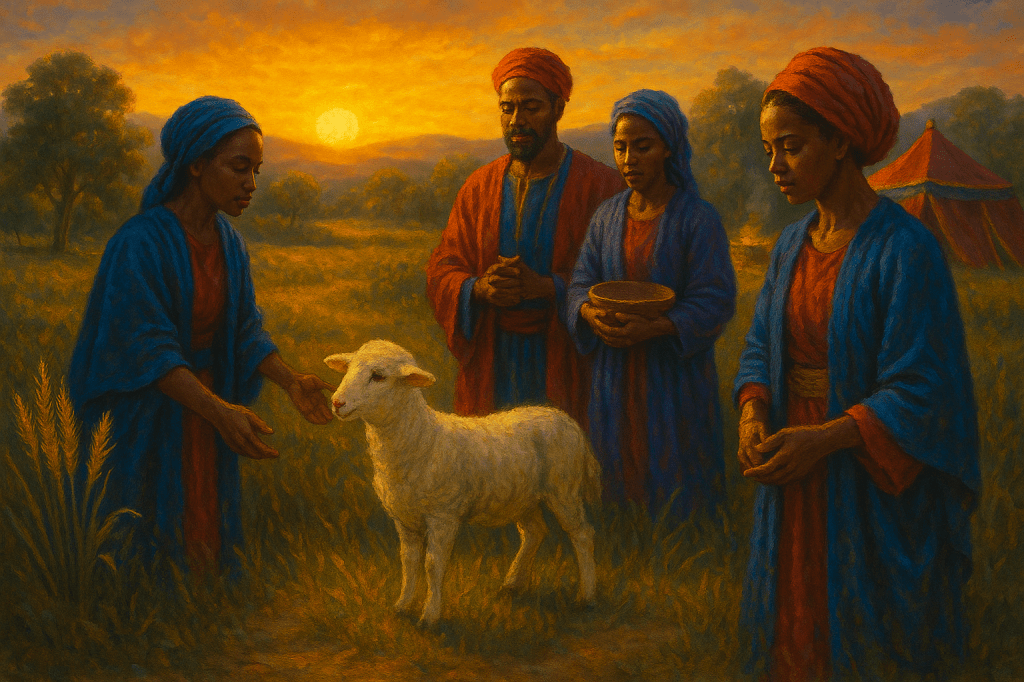

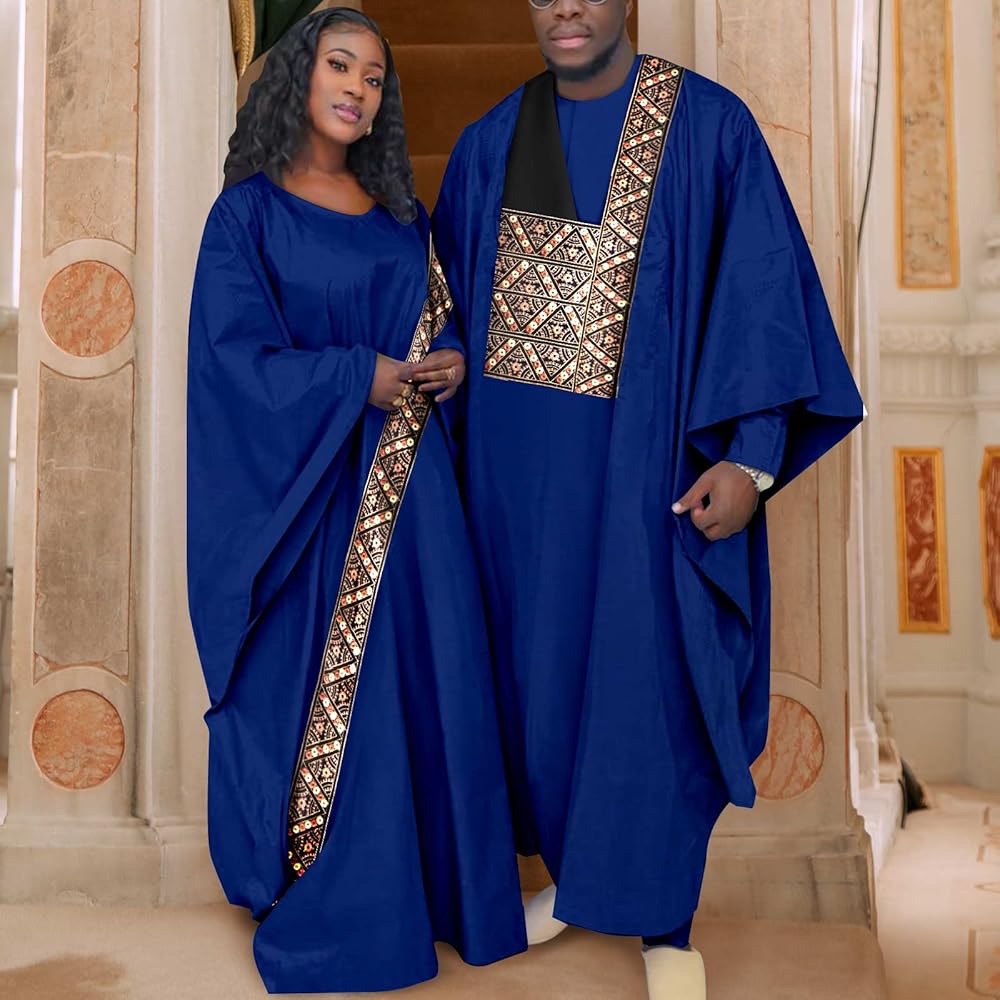
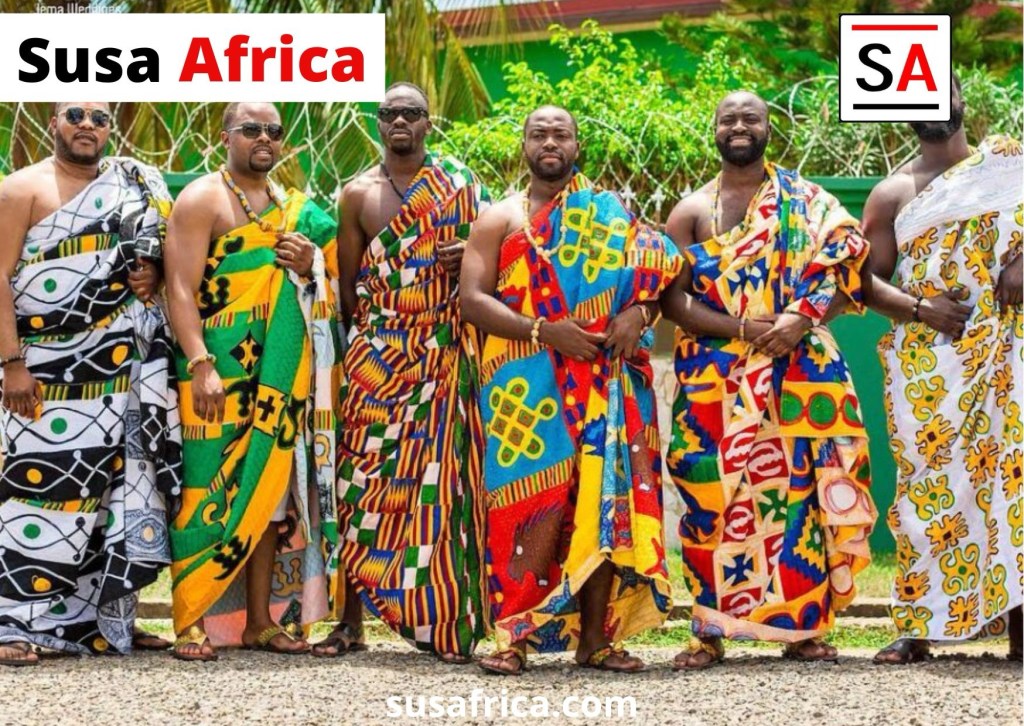



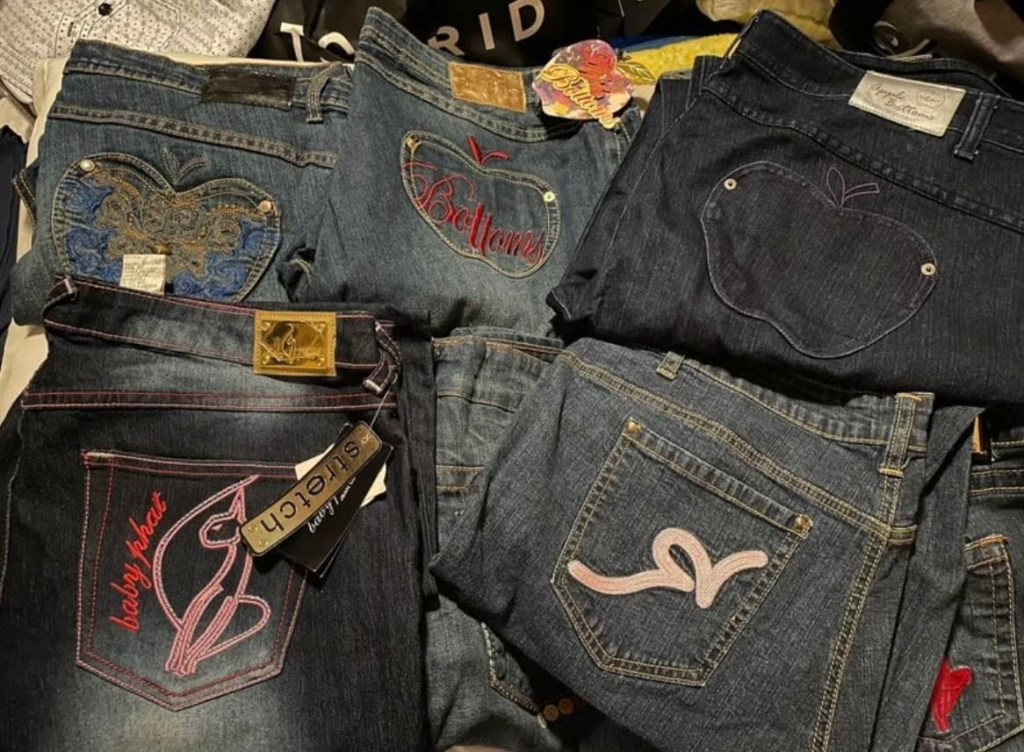
Jeans are relatively modern inventions—just like sneakers or tennis shoes. Scripture routinely speaks about sandals, yet today our men and women wear all kinds of modern, gender-appropriate footwear without controversy, as we should, because no Torah commands restrict such things. The same principle applies to jeans: their gender-appropriate and modest forms do not violate Torah, and they should be understood within the context of modesty, distinction, and intent, not through an anachronistic lens.
So let’s be careful not to impose modern cultural norms onto Torah instructions. The principle is to honor the distinction YAH established between male and female—not to invent rules around garments that didn’t exist until long after The Torah was declared. Even more importantly, we must remember that the spiritual call goes deeper than clothing: we are to reflect the identity YAH gave us from birth, without attempting to diminish, alter, or disguise who we are. Israelites and companions of Israel: stay true to who YAH created you to be as men & women—walk in the identity He has ordained.
3. Head Coverings – What Does Torah Say?
When it comes to head coverings, there is often confusion due to interpretations of the apostle Paul’s words in 1 Corinthians 11. But first, ask this: Where in The Torah is there a command for men or women to wear head coverings?
Torah only requires physical head coverings for priests. Exodus 28:4 outlines the garments for Aaron and the sons of Aaron (priests), which included “turbans” as part of their priestly uniforms. These were not general commands for all men in Israel.
“These are the garments that they shall make: a breastpiece, an ephod, a robe, a woven tunic, a turban, and a sash. They are to make these holy/set apart garments for your brother Aaron and his sons, so that they may serve Me as priests.”
Exodus 28:4
Again, where are the commandments for all men, or any women to wear head coverings? There aren’t any. The Torah does not require men who are not priests or any women to wear head coverings. Now, perhaps, you might have heard claims that, because of a twisting of Numbers 5:18, (where an accused adulteress is commanded to let down (or uncover) her hair during the accusatorial, exposing testing ritual), that women must have always had their hair put up (or covered up), well… Let’s look at the verse:
“After the priest has the woman stand before YAH, he is to let down (or uncover) her hair and place in her hands the grain offering of memorial, which is the grain offering for jealousy. The priest is to hold the bitter water that brings a curse.”
Numbers 5:18
The Hebrew phrase “uparah et-rosh ha’ishah” (https://biblehub.com/interlinear/numbers/5-18.htm), can mean “he shall unbind or loosen the woman’s hair” or “uncover her head.” This is done as part of the ritual where a woman suspected of adultery is publicly exposed before YAH, as part of the ritual which determines her guilt or innocence. The loosing or “uncovering” of the hair in this context is symbolic of total exposure or shame, much like tearing garments or putting ashes on the head in mourning. It does not establish a commandment, requiring women to cover their hair. It doesn’t imply that all women covered their hair in public (despite the likelihood that it was a customary, cultural practice). It doesn’t create a standard for modesty regarding hair.
And for those that twist Genesis 24:65, let’s examine a couple of things here as well, but first, the verse:
“And when Rebekah looked up and saw Isaac, she got down from her camel and asked the servant, “Who is that man in the field coming to meet us?” “It is my master,” the servant answered. So she took her veil and covered herself.”
Genesis 24:64-65
According to The Torah, Rebekah covered herself once she saw Isaac. She had traveled a long journey with Abraham’s servant, and there was no mention of her being covered, veiled, or wrapped up the whole time, with him. She chose to cover herself before appearing to, or better yet, before being presented to Isaac—consider the practice of a veiled bride being presented to her husband on her wedding day. Rebekah’s action was a voluntary gesture of respect and modesty toward the man she was about to marry. It was not a Torah requirement, but a cultural expression—and possibly a personal decision of reverence toward coming into the presence of her future husband, a man of headship. The veil (Hebrew: tsa’if) does not carry the same contextual meaning as “covering” in Paul’s letters. The Hebrew term used here refers to a loose outer garment or shawl that could be drawn over the face and/or body—not necessarily a full-time head covering like a hijab or headwrap.
What About Men’s Head Coverings?
Paul’s teaching in 1 Corinthians 11 isn’t just directed toward women—he actually begins with his proclamation for men, saying:
“Every man who prays or prophesies with his head covered dishonors his head.”
1 Corinthians 11:4

Within some Israelite communities—far more attention seems to be given to what women wear (in general), despite Paul first addressing what men wear. Paul’s words in this passage, which speak about men not having their heads covered during prayer and worship, seem to get overlooked or dismissed by the same communities that insist that their women always have their heads covered. This raises several important considerations. Once again, we see that Paul is addressing both cultural customs and spiritual symbolism—not contradicting the Torah. After all, the Torah commands priests to wear head coverings while ministering before YAH. So as we prepare to close this section out, let’s get to the heart of the matter:
Paul’s Words in Context – Cultural & Spiritual Symbolism, Not Torah Command
In 1 Corinthians 11, Paul discusses head coverings in a Hebrew Israelite worship and cultural context. There is no focus on a Torah command to wear or not wear head coverings, but the focus is on spiritual order and cultural decorum.
• Verse 3: Paul emphasizes the divine order of headship—YAH is the head of Messiah, Messiah is the head of man, and man is the head of woman. This reflects the structure established at creation and reaffirmed after the fall in the garden of Eden.
• Verses 4–7: Paul states that it is dishonorable for a man to cover his head while praying or prophesying, but honorable for a woman to do so. However, Paul is not condemning head coverings in general—he’s addressing symbolic confusion within the assembly, not speaking against Torah. Levitical priests were commanded by YAH to wear turbans during their service, and by doing so, they honored YAH’s instruction—not dishonored it. Even so, whether priest or not, every man in Israel must ultimately come under the headship of our one true High Priest—Yahoshua!
A woman’s natural, physical covering is her hair—specifically her long hair, which Paul describes as her glory and says is given to her as a physical covering (1 Corinthians 11:15). Spiritually, her headship is the man YAH has placed in her life: her father if unmarried, or her husband if married. And just as she is called to be under a covering, under headship, her man is also to be under headship—under Yahoshua—as established in the rightous order that Paul started with in verse 3.
Ultimately, Paul closes this matter by saying:
“But if anyone seems to be contentious, we have no such custom, nor do the assemblies of YAH”—1 Corinthians 11:16.
Paul addressed customs regarding physical head coverings—not Torah commands, not new requirements. His focus is on promoting spiritual order and decency within the assemblies, and he used physical, and cultural practices as illustrations of deeper, spiritual truths.
And just to be clear, once again, here’s the bottom line: Paul’s words were addressing spiritual order, decency, reverence, and proper gender roles—not creating new laws or commandments. There is no sin in a man or woman covering or uncovering their head (apart from the specific Torah instructions given to priests), and there should only be an issue if there is a violation of a vow or personal conviction, or if shalom among the people is disturbed by disrupting the spiritual order within an assembly.
4. Walking in Freedom with Responsibility
Again, let none of us not fall into the trap of adding to or taking away from YAH’s Word. If He didn’t command it, let us not attempt to make it a commandment. And if He did command it, let’s obey it fully.
“For (breaking) Torah brings YAH’s punishment. But where there is no Torah Law, there is also no violation (sin).”
Romans 4:15 “… sin is not counted as such when there is no Torah Law.”
Romans 5:13 “Whoever sins is guilty of breaking YAH’s Torah, because sin is the breaking of Torah.”
1 John 3:4
YAH is not the author of confusion, but of shalom. When our clothing choices reflect both love for and obedience to YAH and His Torah—as seen in passages like Exodus 28:42–43, Numbers 15:38–40, Deuteronomy 22:5, 12, Isaiah 61:10, and 1 Timothy 2:9–10—we demonstrate reverence in both outward appearance and inward conviction. And when our lives also reflect the spiritual order of headship that YAH has established, we walk in honor of Him. In doing so, we are able to live freely within His will, clothed in both modesty and righteousness.
“Now YAH is The Spirit, and where The Spirit of YAH is, there is freedom. And we, who with unveiled faces all reflect the glory of YAH, are being transformed into His image with intensifying glory, which comes from YAH, who is The Spirit.”
2 Corinthians 3:17-18
What We Should ALL Wear
You will have noticed the two referenced passages directly above, that speak to commandments for all of us to obey. Yes, there is one garment-related accessory that we are all instructed to wear according to Torah—and it’s a simple yet powerful one: fringes (tzitziyot). As Yahoshua reminded us in Matthew 5:19, we are not to dismiss even the least of the commandments. Now, I wear both of the most common variations of fringes—sometimes I wear the four hanging tassels, and other times I wear the fringes that encircle the hem of my garments. I don’t debate about the style of fringes, the weightier matter is to wear them. I wear them with the sincere desire to honor YAH’s instruction and as a visible reminder of His Torah and the covenant we’ve entered into with Him. Like my lil achot (sister) Z once said and I often paraphrase, “Remember the vows of your covenant to YAH, every time that you see your fringes, let them be a symbol, like a wedding ring, every day.”

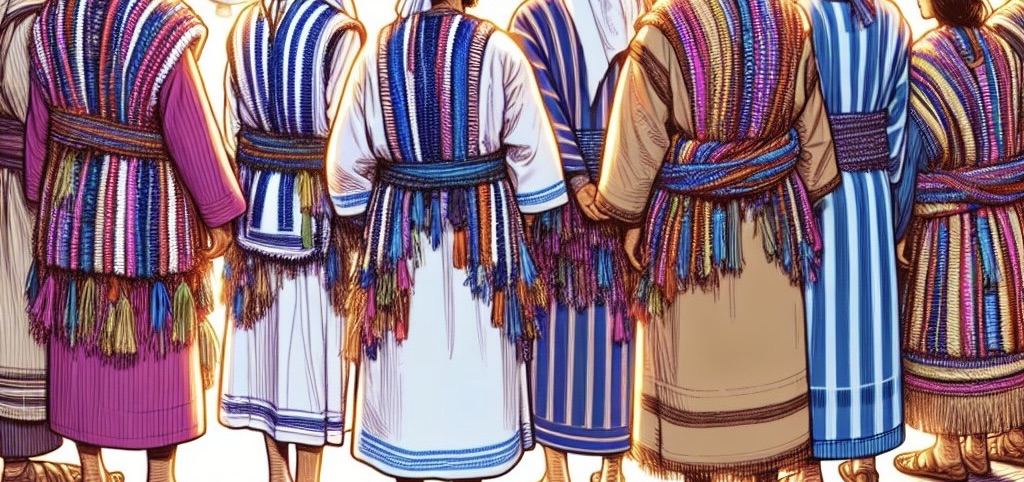

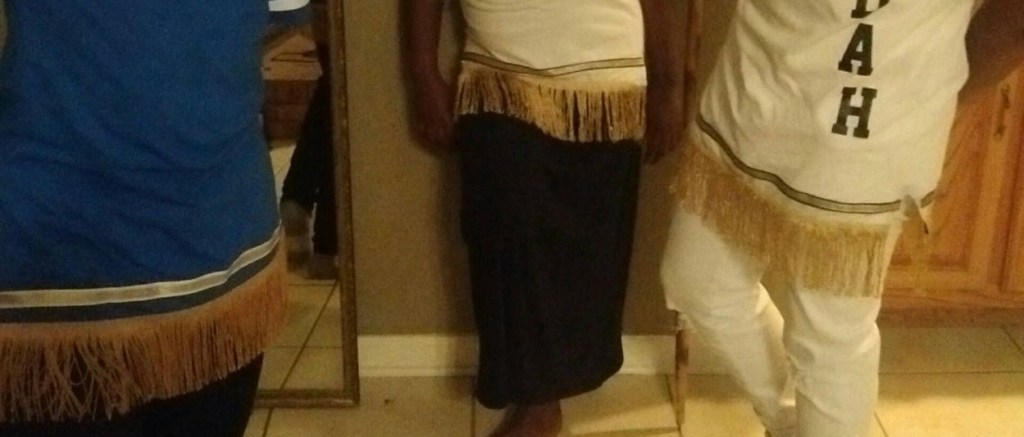
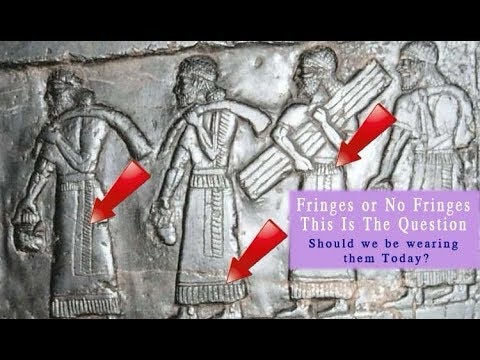

We love YAH by obeying His commandments (1 John 5:3), it is our reasonable service (Romans 12:1). Love YAH, honor & obey Him—wear your fringes and remember the covenant!
Prayerful Thought
You might disagree with me, but please do not allow outer garments to be a point of Torahless contention among your homes or assemblies, pray for wisdom, understanding, discernment, and humility; pray for both yourself and one another; and dress according to YAH’s Torah—His instructions. Let us aim to always seek adherence to the unadulterated Word of YAH. Let our garments be as righteous & pure as our spirits are, let our customs be rooted in YAH’s truth, and let our fellowship be free from the burdens of man-made doctrine and dysfunctional dogma. May YAH clothe us in humility and love, as we walk after the righteousness of Yahoshua, ensure that we put on the whole armor of YAH (Ephesians 6:10-17.), by obeying His Word every day!
Until next time, shalom ✌🏾
~Yahrahn
Like, comment, share, and subscribe
If you would like to donate:
Cash App: $Yahrahn https://cash.app/$Yahrahn
PayPal: @Yahrahn https://www.paypal.me/Yahrahn

Well written. Thank you for talking out the time to blog about this topic and carefully explaining the topic biblically and culturally. As always, great work!
LikeLiked by 1 person
Thank you, and its my pleasure. All praises to The Most High YAH!
LikeLike