

There’s been a wave of new conversations and debates floating around about this topic, especially in light of these viral clips:
🔗 Video 1
🔗 Video 2
🔗 Video 3
Did you watch each of the clips above?
If so… good. Let’s build.
Yes, the phrase and song “Kumbaya” has been reshaped in modern times into something that it wasn’t originally. The clips above — and the definitions floating around today (see below) — clearly show how it has been softened, twisted, repackaged, and reframed.


Now that that’s out of the way, I think we can all agree: That’s not what our ancestors were singing about 😮💨. They weren’t crying out for fun, at some campfire sing-along, talking about “come by here, dear Lord, so we can all live in unity and harmony.” No — they were crying out for rescue.
To be clear, I’m not diving into debates about the Gullah Geechee or any particular Creole or English dialects — though there’s rich connection there. I just want to raise a few important considerations.
Let’s start by considering what can happen to Hebrew phrases when passed down over time. Take for instance how the Hebrew word/phrase “Hallelujah” gets treated, see this blog below for more on that:
What Does Hallelujah Mean? Quick Hint, It Doesn’t mean “The Highest Praise”
Consider how the Hebrew phrase “HalleluYAH” is treated today. It’s misspelled, but not mispronounced. It’s sung, spoken, and exclaimed worldwide — yet the vast majority of people using it don’t realize it quite literally means: “Praise YAH!” YAH being the truncated name of The Most High!
If that can happen with HalleluYAH being changed to Hallelujah, then we should seriously consider that something very similar could have — and likely did — happen with the phrase “Qumah YAH”.
🤔 And What Does Qumah YAH Mean?

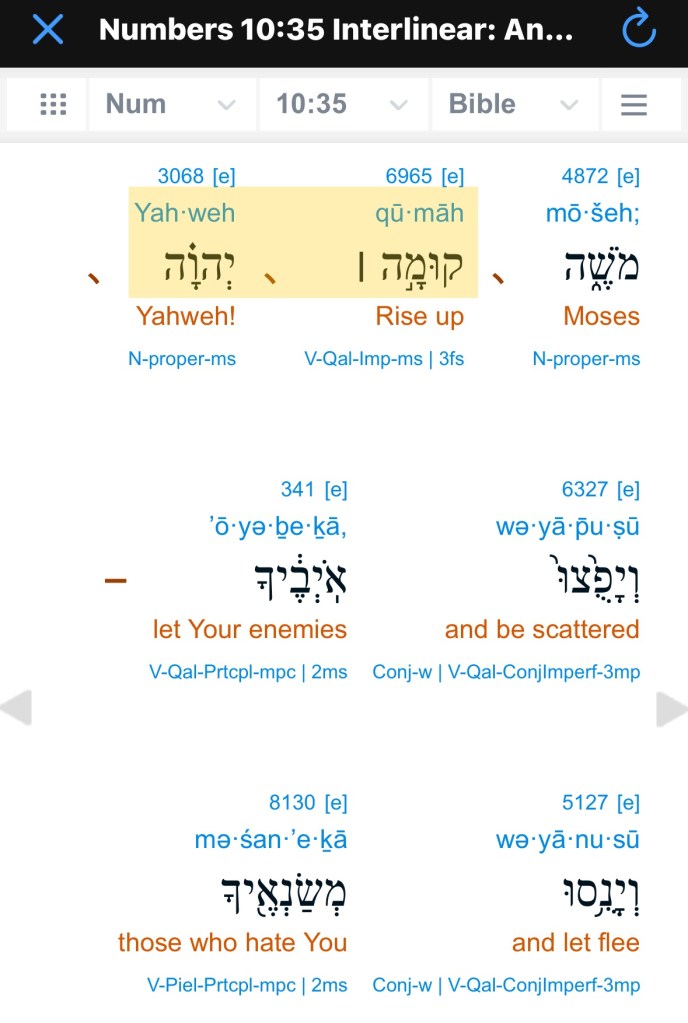
While most linguists trace “Kumbaya” to Gullah-English roots, the biblical Hebrew phrase “Qumah YAH” or more fully “Qumah YAHUAH” (קוּמָה יְהוָה) being a spiritual call to action — “Arise, YAH!” — opens up a strong, overlooked, and spiritually compelling lens to re-examine the song.
📜 Hebrew Examples: Qumah YAHUAH — Rise Up, YAH!
Here are key Scriptures where Qumah YAHUAH appears:
- Numbers 10:35 “And it came to pass, when the ark set forward, that Mosheh said, ’קוּמָה יְהוָה — Qumah YAH (Arise, YAH), and let Your enemies be scattered…’”
- Psalm 3:7 “Qumah YAH (Arise, YAH)! Save me, O my Elohim…”
- Psalm 9:19 “Qumah YAH (Arise, YAH), let not man prevail…”
- Psalm 10:12 “Qumah YAH (Arise, YAH); O El, lift up Your hand…”
- Psalm 17:13 “Qumah YAH (Arise, YAH), confront him, cast him down…”
Each of these is a raw and righteous plea — for deliverance, protection, salvation, or justice.
🎶 Kumbaya as a Spiritual Echo of Qumah YAH
Again, though Kumbaya is interpreted as “Come by here, my Lord,” it also phonetically and spiritually echoes two familiar Hebrew phrases:
HalleluYAH — “Praise YAH!”
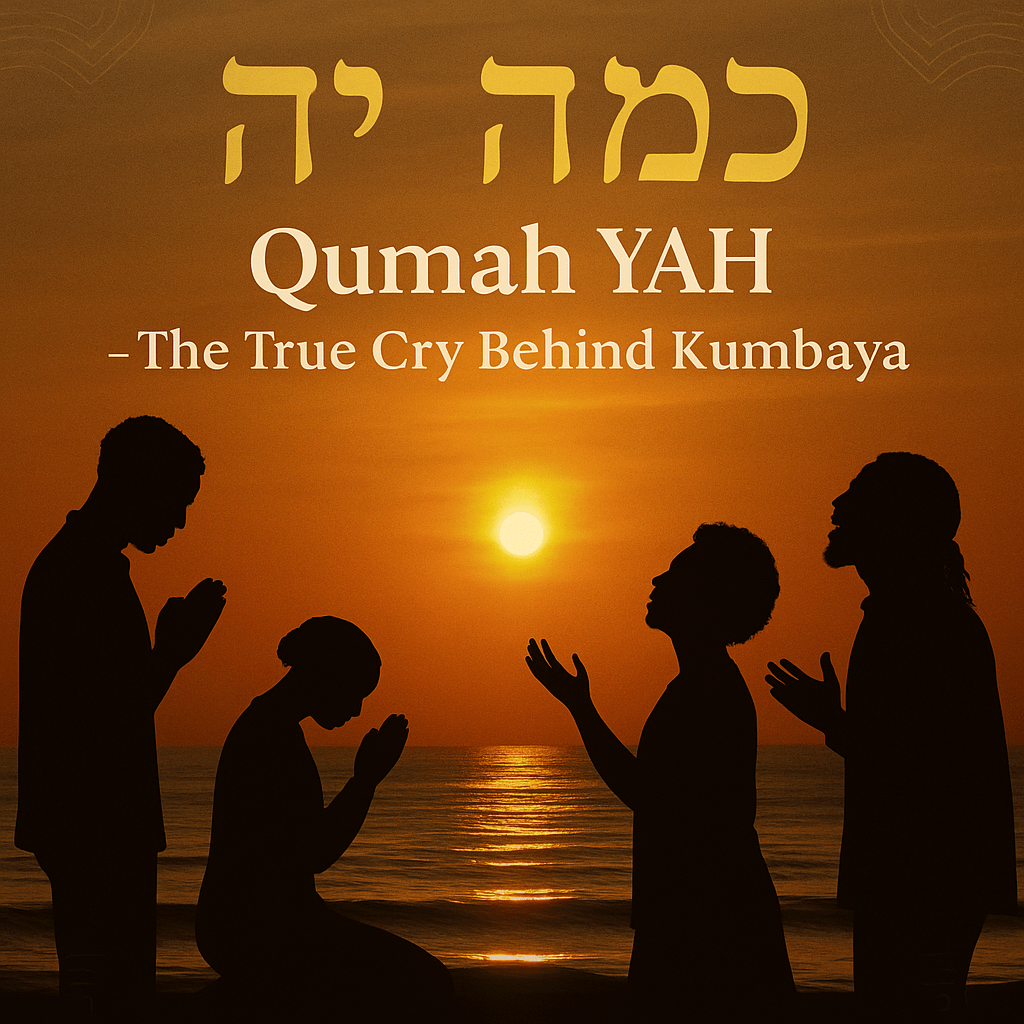
Qumah YAH — “Arise, YAH!”
It’s reasonable — and I’d argue likely — that enslaved Hebrew Israelites, first in Africa (”Negro Land, Kingdom of Juda”) and then in the Americas, carried oral memory and spiritual instincts rooted in Torah. Even through forced assimilation and loss of language, the cry remained — even if altered. The pure Hebrew may have been creolized or anglicized… but the essence remained.
So yes, while “Kumbaya” is widely interpreted as “come by here,” it may very well be a faded echo of “Qumah YAH” — a cry from the souls of the afflicted, pleading for YAH to rise and deliver.
Again, just like “Hallelujah” is shouted and sung worldwide with little understanding of its origin, Kumbaya may be another phrase that has roots in Hebrew, unknowingly preserved in the voices of the oppressed — those who cried out for YAH to rise and redeem His people.
🔎 Additional Spiritual Insight
Many of our enslaved ancestors encoded Scripture into their songs — so-called “Negro Spirituals.” The Gullah-Geechee community stands out as one of the most culturally preserved remnants of the diaspora, many of whom descend from West African regions (previously called Negro Land on old maps), where Hebrew traditions, names, and Torah teachings were passed down.
Spirituals like:
- “Go Down, Moses”
- “Wade in the Water”
- “Swing Low, Sweet Chariot”
- “Mary Don’t You Weep”
- And of course “Kumbaya”
are soaked in biblical imagery of deliverance — and likely functioned as coded Hebraic cries, disguised in Christianized settings but still carrying the soul of Torah and the voice of Israel. All of which are now breadcrumbs for us to find our way back to the Hebrew Truth (study Deuteronomy chapters 28 & 30).
What We Are and Are Not Doing
We’re not reaching when we hear Qumah YAH in Kumbaya — We’re remembering.
We’re reconnecting with the cry of our ancestors, the cry of Israel — the cry for YAH to arise, defend, and redeem.
And when we call to Him humbly, fervently, and obediently—in spirit & truth, He hears us as His people:
“If My people, which are called by My name, shall humble themselves, and pray, and seek My face, and turn from their wicked ways; then will I hear from heaven, and will forgive their sin, and will heal their land.”
2 Chronicles 7:14
“YAH is nigh unto all them that call upon Him, To all that call upon Him in truth. He will fulfil the desire of them that fear Him: He also will hear their cry, and will save them. YAH preserveth all them that love Him: But all the wicked will He destroy.”
— Psalm 145:18-20
“And it shall come to pass, that whosoever shall call on the name of YAH shall be saved.”
— Acts 2:21
“For whosoever shall call upon the name of YAH shall be saved.”
— Romans 10:13
“And it shall come to pass, that whosoever shall call on the name of YAH shall be delivered: for in mount Zion and in Jerusalem shall be deliverance, as YAH hath said, and in the remnant whom YAH shall call.”
Joel 2:32
If you choose to hold to the common belief that Kumbaya simply means ‘Come by here,’ that’s your choice — and I’ll still sing it with you. But know that when I sing it, I’m singing one of our ancient songs… a plea that YAH comes by here after He rises up against His enemies.
Qumah YAH! HalleluYAH!
Until next time, shalom ✌🏾
~Yahrahn
Like, comment, share, and subscribe
If you would like to donate:
Cash App: $Yahrahn https://cash.app/$Yahrahn
PayPal: @Yahrahn https://www.paypal.me/Yahrahn
