
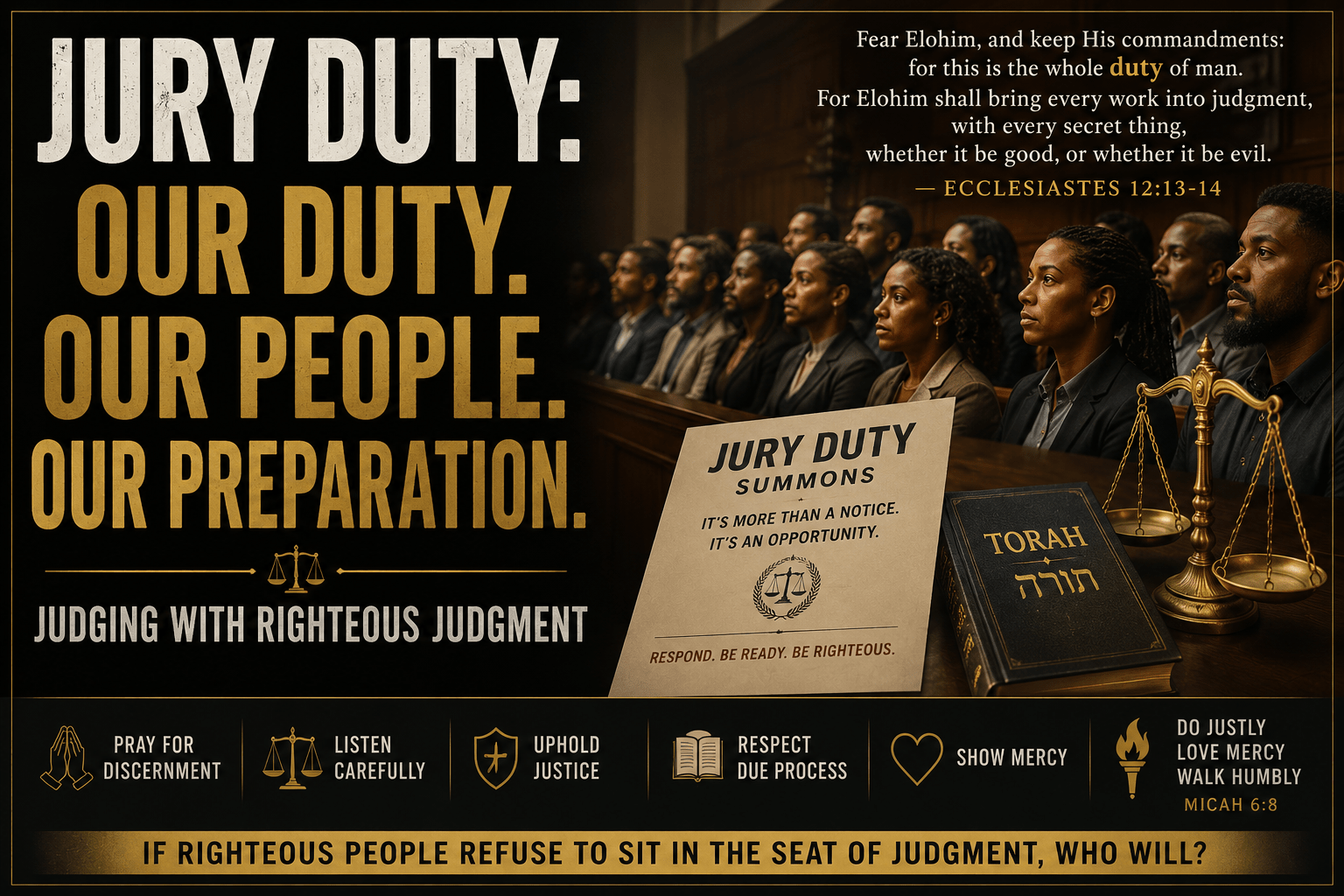
Every so often, another jury summons arrives in my mailbox. When I mention that I actually respond and show up when summoned for jury duty, some of my friends have looked at me strangely. Others have asked why I would participate in a court system that fails our people.
It is a fair question…
After all, many of us can point to examples of injustice dispensed from these courtrooms. We have watched innocent people receive extreme sentences, while watching others who are guilty, walk free. We have witnessed unjust judges, lawless lawyers, unfit juries, and corrupt courtrooms for generations.
Yet every time a jury summons arrives, I find myself thinking about a passage from Scripture:
“Do you not know that the saints will judge the world? And if you are to judge the world, are you not competent to judge trivial cases? Do you not know that we will judge angels? How much more the things of this life!”
1 Corinthians 6:2-3
Paul’s words force us to consider something many believers overlook. Since the saints (the set-apart righteous ones) will judge the world and the angels, then, we should not run from opportunities to exercise righteous judgment today.
Judgment Has Always Been Part of The Most High YAH’s Order
From the beginning, YAH established justice via judges among His people. Before Moses became overwhelmed by the needs of the people, capable men were appointed to help judge matters among Yisrael. Later, judges and officers were established throughout the land.
“Judges and officers shall you make thee in all your gates, which YAH your Elohim gives you, throughout your tribes: and they shall judge the people with just judgment.”
Deuteronomy 16:18
Notice the command was not simply to judge. The command was to judge justly. Scripture further and consistently teaches that judgment must be based upon truth, evidence, impartiality, and righteousness:
“You shall not respect persons in judgment; but you shall hear the small as well as the great…”
Deuteronomy 1:17
And this might be a good time to further dispel a common misconception that Bible believers are not supposed to judge — at all. The problem has never been judgment itself. The problem has always been unrighteous judgment.
“Do not judge and criticize and condemn [others unfairly with an attitude of self-righteous superiority as though assuming the office of a judge], so that you will not be judged [unfairly]. For just as you [hypocritically] judge others [when you are sinful and unrepentant], so will you be judged; and in accordance with your standard of measure [used to pass out judgment], judgment will be measured to you.”
Matthew 7:1-2 AMP
A Hebraic Consideration
In Hebrew, judging (shaphat) often means more than condemning. It can also mean:
- governing,
- ruling,
- rendering decisions,
- exercising authority.
Remember your Scripture readings: you see that the Judges of Yisrael did far more than perform jury duty. Ok, let’s continue…
The Cost of Empty Seats
Many people complain about juries. And far too many of those same people avoid jury duty and immediately begin looking for excuses to get out of serving when their summons arrives in the mail.
But what happens when righteous people refuse to occupy the jury seats of judgment? The seat does not remain empty — Someone else fills it. If a courtroom needs twelve jurors and every person who values truth avoids their duty, who remains to decide the case and provide the verdict?
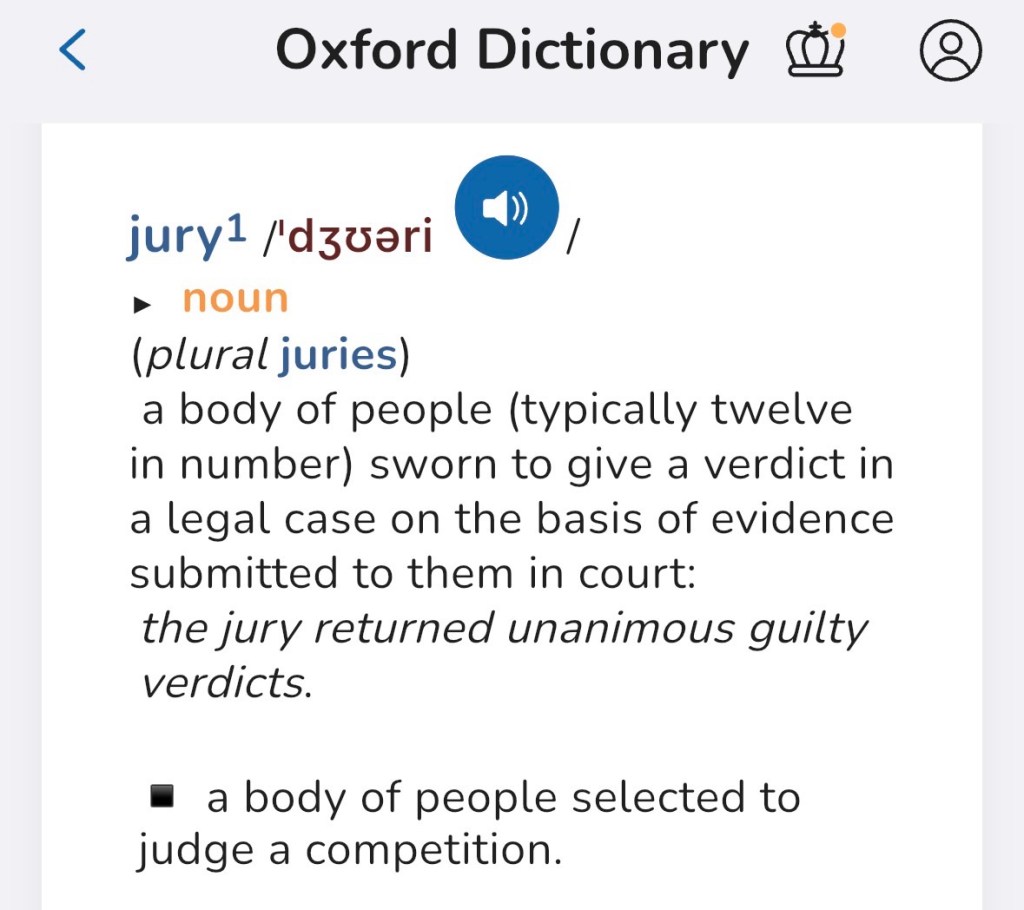
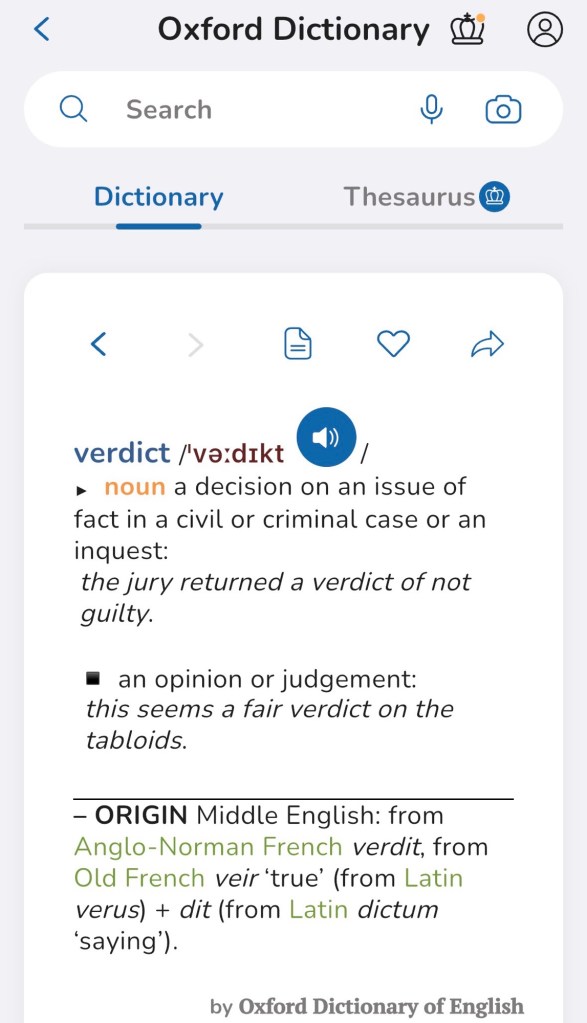
This reality becomes especially important when we consider the history of injustice experienced by our people. Most of us can recall multiple cases where verdicts were blatantly unjust. We remember trials where juries did not reflect the communities being judged — so much a ‘jury of your peers’. We have lived through so many cases, witnessing the repeated miscarriage of justice. And regardless of how one feels about any particular case, the prevailing, overwhelming perception itself reveals something important:
We want justice. We want a justice system that is just. We want decision-makers who are committed to truth & justice rather than hatred, fear, and prejudice.
What If It Were Yours?
Imagine your son standing trial… Imagine your daughter, brother, spouse, friend… Imagine it was you on trial.
Would you want a jury filled with people who rushed to conclusions? Would you want jurors driven by emotion, bias, politics, social pressure, family ties, or media narratives? Or would you hope at least one person in that room cared deeply about truth, justice, and fairness? Most of us know the answer.
We would pray for fair-minded jurors. We would pray for people willing to examine the facts honestly. We would pray for people who understood that judgment is a sacred responsibility. We would pray for grace & mercy.
If we desire such jurors when we, our friends, or family seek justice, why should we refuse to become that kind of juror for others? Consider it: You might be the only one out of the 12 jurors who will judge with righteous judgment. Someone might need only what you can provide.
Be the Kind of Juror You Would Want
Of course, simply showing up for jury duty is not enough. We must also strive to be the kind of people who can be entrusted with the position of judgment.
The reality is that both our daily conduct and our answers during jury selection matter. Attorneys and judges should be looking for people they believe can evaluate facts fairly, follow the law, and render an honest verdict.
As followers of Scripture, we should be among the most qualified people in the room. Why again? Because we are called to judge according to a higher standard.
Again, Torah repeatedly commands judges to be impartial, to reject favoritism, to hear both sides of a matter, and to judge righteously:
“You shall do no unrighteousness in judgment: you shall not respect the person of the poor, nor honor the person of the mighty: but in righteousness shall you judge your neighbor.”
Leviticus 19:15
The Messiah Yahoshua Himself taught:
“Judge not according to the appearance, but judge with righteous judgment.”
John 7:24
A person who walks according to these principles should be exactly the kind of juror every court should want.
That means we should learn to communicate thoughtfully and respectfully. We should demonstrate that we value due process, evidence, truth, and fairness. We should not appear eager to condemn anyone, nor should we appear unwilling to hold someone accountable when the evidence requires it.
A righteous judge is neither weak nor harsh. A righteous judge is just.
When serving on a jury, we are not there to advance personal agendas, political loyalties, racial preferences, social pressures, or popular opinion. We are there to weigh the matter fully and honestly.
We understand and keep the laws of the land, but our character is shaped by the wisdom, instruction, Law of YAH — His Torah rules over everything we do.
We pray for discernment. We season our words with His wisdom. We listen carefully to the whole matter. We consider the evidence. We reject favoritism. We are not swayed by titles, wealth, threats, bribes, public opinion, or the status of the accused.
We judge righteously because we know that we ourselves will one day be judged.
As Solomon concluded:
“Fear Elohim, and keep His commandments: for this is the whole duty of mankind. For Elohim shall bring every work into judgment, with every secret thing, whether it be good, or whether it be evil.”
Ecclesiastes 12:13-14
Those who remember that they themselves will be judged should be the most careful when judging others. Let us remember what the prophet Micah said:
“He has shown you, O man, what is good; and what does YAH require of you but to do justly, and to love mercy, and to walk humbly with your Elohim?”
Micah 6:8
Justice
Mercy
Humility
Those are exactly the qualities we should want in every juror’s seat.
Training for The Kingdom
Paul’s words in 1 Corinthians should never leave our minds, we must remember that The Most High YAH’s children are not merely waiting for the Kingdom, but we are being prepared for it.
One day, the righteous will participate in the judgment of the world under the authority of The Messiah. That future responsibility requires wisdom, discernment, patience, integrity, and a commitment to truth. Those qualities are developed through the power of YAH’s Set Apart Spirit and can be cultivated even now through our spiritual practice.
Every opportunity to judge righteously is preparation for greater responsibilities ahead. Now, this does not mean earthly courts will be perfect nor will these courts be just, just because we end up being one of the 12 jurors. They are most certainly still courts of men. But it does mean that our people who value righteousness should think carefully before abandoning the privilege and opportunity to influence the outcome of just judgment.
Answering the Summons
My hope (if you can’t tell by now), is: The next time a jury summons arrives in your mailbox, you won’t begin complaining and looking for a way to get out of it. Instead, I pray that you will remember that YAH may be placing you in a position to help ensure justice prevails.
The world is full of people ready & willing to complain about corruption, bias, and unfair judgments. But the world is not full of enough people who are ready to perform the duty required, remembering that righteous judgment requires righteous judges (jurors).
Since our communities need fairness, our families need justice, and our people need advocates for truth, then we should spend less time avoiding the jury box and more time being prepared to sit in it.
Again, if your son, daughter, spouse, brother, sister, best friend, etc… were on trial, would you want someone like you in that jury box? Would you want someone who values truth over assumptions? Would you want someone who listens carefully before reaching a conclusion? Would you want someone who seeks justice rather than simply following what so-and-so said?
Most of us would answer: YES.
The question then is not whether we should serve when called. The question is this:
If righteous people refuse to sit in the seat of judgment, who will?
Until next time, shalom ✌🏾
~Yahrahn
Like, comment, share, and subscribe
If you would like to donate:
Cash App: $Yahrahn https://cash.app/$Yahrahn
PayPal: @Yahrahn https://www.paypal.me/Yahrahn
And we are not naive to the injustice system within these nations, when the verdicts come, let us remember and meditate on the powerful psalm I highlighted in this blog years ago:

“we must remember that The Most High YAH’s children are not merely waiting for the Kingdom, but we are being prepared for it.”
Thank you for helping us to reconsider and remember.
LikeLiked by 1 person
All praises to The Most High YAH!
We are in this together achoti!
LikeLike